
Why Astrology refuses to leave the Stars of Power and Fame in India
At last .... a Government appointed Astrologer !?
I was inspired to write this article because of a rapid 24-hour political uproar in Tamil Nadu involving a Government-appointed Astrologer. It perfectly captures the paradox of our time: while modern life runs on science and reason, the hidden influence of Vedic Astrology still sways major decisions in politics, power, business and cinema.
Kudos to CM Joseph Vijay for this unprecedented step.

I am thrilled to write about the vital role of Vedic Astrology in contemporary society. For too long, colonial-era mindsets diminished this sacred science, but professional Astrologers are finally regaining their rightful respect. This shift was vividly demonstrated following Tamil Nadu Chief Minister Thiru Joseph Vijay's inauguration on May 10, 2026. By appointing his Astrologer, Rickey Radhan Pandit Vettrivel, as an Officer on Special Duty (Political), the Chief Minister of Tamil Nadu validated an entire profession. This landmark decision is a collective triumph for Indian Astrologers, who serve as trusted advisors to the nation's elite.
However, what happened to the Astrologer after 24 hours matters far less than the landmark precedent that was set : for the first time in India, a prominent politician has publicly acknowledged his gratitude for an Astrologer's prediction. Kudos to CM Joseph Vijay for this unprecedented step.
The high-stakes world of modern politics and business often presents a façade of hard science, data-driven policymaking, and clinical rationalism. Exit polls before elections add to the suspense and confusion that is expected in the world of politics. The best minds are unable to see the future. Journalists in Tamilnadu fumbled to give the right picture of the future. Obviously people look for alternatives. If science and common sense and existing political data cannot predict the outcome of an election what else can? In a situation like this the big names reach out to their Astrologers.
Unknown to many economists of India, one of the largest industry in India is the industry of Astrology and Vastu Sastra that has always been the backbone of many background of many decisions that affect the people and the nation. The total gross annual turnover of the overall Astrology and related business in India is estimated to be approximately ₹3,20,000 crore (around $35 billion to $40 billion). Who are the clients? Yet most of the big names in India never openly admit consulting their Astrologers.
Nehru Paradox of Astrology

Jawaharlal Nehru maintained a complex, dualistic relationship with Vedic Astrology, publicly denouncing it as a superstition that harmed India's progress while privately engaging with it for family and state matters. He balanced a staunch commitment to a "scientific temper" with deep-rooted familial traditions. Nehru coined the phrase "scientific temper" to champion logic, observation, and testable facts. He believed that relying on stars for future predictions was entirely unscientific. In his writings and speeches, Nehru argued that Astrology made people fatalistic. He felt that relying blindly on horoscopes stripped people of their self-confidence and initiative to change their own destinies.
In an official letter to Dr. Rajendra Prasad in September 1949, Nehru explicitly wrote, "I am afraid I have no faith in astrology...". He firmly rejected having books on astrology dedicated to him, stating it went against his principles.
In a famous private letter sent from Ahmadnagar Fort on August 29, 1944, to his sister Krishna Hutheesing, Nehru explicitly requested a horoscope for his newborn grandson, Rajiv Gandhi. He wrote: "In my letter to Indu [Indira Gandhi] I suggested to her to ask you to get a proper horoscope made by a competent person. Such permanent records of the date and time of birth are desirable...". He even reminded her to use proper solar time rather than artificial wartime clock changes.
Biographies and political chronicles—such as Durga Das's India from Curzon to Nehru and After has noted that Nehru quietly allowed or sought consultations with certain traditional Astrologers (like Haveli Ram) during highly stressful political phases, such as the 1962 Sino-Indian War.
When Great Britain decided to grant India independence on August 15, 1947, Astrologers across India panicked, claiming the date was highly inauspicious. To respect public sentiment and ensure structural stability, Nehru agreed to using Astrology to fix the muhurta for midnight so India was born at the stroke of the auspicious Abhijit Muhurta. This is the story of the Freedom at Midnight.
Since then, politicians and celebrities have used Vedic Astrology but kept it secret to avoid public backlash. Follow the footsteps of Jawaharlal Nehru - consult Astrologers in private but reject it in public. I wish to call this "Nehru Paradox of Astrology".
A king who fails to honour an Astrologer
This particular verse is presented in the Bṛhat Saṃhitā as a statement attributed to Bhagavān Garga
कृत्स्नाङ्गोपाङ्गकुशलं होरागणितनैष्ठिकम् ।
यो न पूजयते राजा स नाशमुपगच्छति ॥
Transliteration:
Kṛtsnāṅgopāṅgakuśalaṃ horā-gaṇita-naiṣṭhikam,
Yo na pūjayate rājā sa nāśam upagacchati.
Simple translation:
A King who fails to honour an Astrologer who has thoroughly mastered every major and minor branch of Jyotisha—and who is deeply proficient in both Horoscopy and astronomical calculations—will eventually meet with ruin.
From Prince Siddhartha to Roman Emperors
The Birth of the Buddha: Long before Prince Siddhartha Gautama achieved enlightenment to become the Buddha, his life path was dictated by an astrological reading. Upon his birth, King Shuddhodana summoned the revered hermit-astrologer Asita to read the infant's horoscope. Asita noted the child's extraordinary physical and cosmic markings, predicting with absolute certainty that Siddhartha would either become a Chakravartin (a magnificent, world-conquering Emperor) or a Tirthankara an enlightened being (a supreme spiritual leader who would deliver humanity from suffering). What finally happened was as you all know Prince Siddharth became the Chakravartin of Spirituality.
The Imperium of Rome: Roman rulers aggressively used Astrology as an active tool of statecraft and defence. Emperor Augustus, the first ruler of the Roman Empire, linked his political authority to the stars by publishing his birth chart to validate his divine right to rule. Later, Emperor Tiberius maintained a trusted court Astrologer named Thrasyllus, who advised him on administrative executions and imperial succession. To prevent rivals from weaponising Astrology, Emperor Septimius Severus famously painted his birth chart onto the palace ceiling but strategically omitted his exact ascendant sign so enemies could not calculate the exact moment of his downfall.
Queen Elizabeth I & Dr. John Dee: In 16th-century England, Queen Elizabeth 1 relied explicitly on Dr. John Dee, a brilliant mathematician, astronomer, and Astrologer. Dee calculated the mathematically most auspicious date for Elizabeth’s coronation to ensure a stable and prosperous reign. He remained a secret national security advisor, interpreting astrological charts to guide England's defense plans against the Spanish Armada.
The Court of King Vikramaditya: In ancient India, the legendary king maintained Varāhamihira as one of the "9 Gems" (Navaratnas) of his royal court. Varāhamihira revolutionized predictive science, and the King bestowed upon him the ultimate title of "Varah" after he accurately predicted the nature of death of the crown prince. The King has taken all the precautions to protect the crown prince but somehow as predicted "Varaha" eventually killed the crown price. From that day onwards Mihira was called Varahamihira.
Tamil Nadu Ex Chief Minister (Late) J. Jayalalithaa altered the spelling of her name for numerological favour and strictly scheduled her oath-taking ceremonies and major party meetings during highly specific, astrologically auspicious windows.
Prominent political researcher K.N. Rao extensively documented the astrological dependencies of the Nehru-Gandhi dynasty, tracking how planetary transitions aligned with major state decisions.
The most chilling story of a King and Astrologer
The story of Julius Caesar and his Astrologer is perhaps the most famous historical warning in the history of global politics. It is about a prediction made by the famous Roman Astrologer Spurinna. He warned Caesar that his life would be in grave danger for the next 30 days. The final, most volatile day of this dangerous window corresponded precisely to March 15, 44 BC which is known on the Roman calendar as the Ides of March. On the morning of March 15, Caesar's wife, Calpurnia, woke up terrified from a nightmare in which she held Caesar’s murdered body. Spurred by his wife's fear and feeling unwell himself, Caesar initially decided to cancel his scheduled meeting with the Roman Senate.
However, Decimus Brutus one of the key conspirators plotting against him and arrived at Caesar's home. Decimus mocked the idea of a powerful leader being ruled by bad dreams and seers, subtly tricking Caesar into changing his mind and heading toward the Senate chamber. While traveling through the streets of Rome toward the Theatre of Pompey (where the Senate was meeting), Caesar spotted Spurinna in the crowd. Feeling arrogant and believing the danger had passed, Caesar called out mockingly to the Astrologer: "The Ides of March have come!"
Astrologer Spurinna looked back at the dictator and calmly replied with the now-legendary phrase: "Yes, Caesar, but they have not gone." Meaning the day is not over yet. Minutes later, Caesar entered the Senate chamber. A group of roughly 60 conspirators, including his trusted protege Marcus Junius Brutus, surrounded him under the pretense of presenting a political petition. They drew hidden daggers and stabbed him 23 times, fulfilling Spurinna’s warning on the very last day of the predicted timeline.
The 24-Hour U-Turn in Tamil Nadu
Let's go back to the most recent story on the "Nehru Paradox" of Vedic Astrology. A dramatic, 24-hour political storm in Tamil Nadu has once again forced this enduring "Nehru Paradox" into the public spotlight.
The debate over the role of Vedic or Ancient Indian Astrology in public administration reignited on May 12 2026, when the newly formed Tamizhaga Vettri Kazhagam (TVK) government, led by Chief Minister C. Joseph Vijay, issued an official state order.
The decree appointed prominent Astrologer Rickey Radhan Pandit Vettrivel, popularly known as Radhan Pandit as an Officer on Special Duty (Political) directly under the Chief Minister. The expected backlash from opposition parties, rationalist movements, and coalition allies was instantaneous. Critics fiercely argued that placing an "Astrologer" on the taxpayer funded payroll compromised constitutional values, blurred secular lines, and actively promoted unscientific thinking that promoted superstitions. Amid intense public pressure, the government revoked the appointment in less than 24 hours. However, political insiders noted that the swift reversal could not erase the deep personal bonds motivating the move.
Long before the election, Radhan Pandit had publicly predicted a "political tsunami" for TVK. Having also served as a media spokesperson and campaign aide during the election cycle, his short-lived appointment appeared to be a gesture of gratitude for his loyalty, campaign support, and accurate predictions. At this point I would like to give my opinion that the word Tsunami should not be used for such great victories because Tsunami is always a destructive catastrophe. Phrases like "Clean sweep victory" or "A magical heist" may sound better than a "Tsunami Victory".
A History Intertwined with Thrones
While the Tamil Nadu episode shocked modern intellectuals, history shows that rulers have always kept Astrologers within arm's reach. Across centuries and continents, royal courts in India, Nepal, China, Persia, Egypt, and Europe officially employed Astrologers to guide existential decisions. These seers of the future advised monarchs on:
- Coronations and succession transitions
- Military strategies and declaring wars
- Treaties and geopolitical alliances
- Auspicious dates for vital travel and city foundations
In India, Ancient Astrology historically transcended simple superstition, standing as an expansive spiritual and cosmic science that attempted to synchronize human life with celestial rhythms and patterns. Even today, this cultural fabric remains intact; political rallies, oath-taking ceremonies, and major product rollouts across the country are quietly scheduled according to favorable alignments.
According to Master Yuvaraj Sowma, a 7th generation hereditary Vasthu consultant, modern Indian property developers rely heavily on Vasthu experts. Even the highest quality apartments face severe sales challenges if they lack Vasthu compliance because the majority of people believe in Vasthu Sastra.
The Battle Lines: Rationalism vs. Traditions
For centuries reason was seen as light, while traditional practices were viewed as ignorant darkness. They are seen as opposites by those who considered themselves as extremely intelligent. The modern view does not see rationalism and tradition as enemies. Instead, contemporary philosophy, psychology, Astrology and sociology view them as complementary forces that shape human live and subsequently the society. Long-standing practices survived because they solved real-world problems. Fields like modern medicine now integrate traditional knowledge (like herbal remedies and Ayurveda) after validating them through scientific trials.

Guruji E K Dhilip Kumar a professional Astrologer from 1994 says that the true value of Vedic Astrology lies in psychological preparation of the person using the information in the horoscope. An expert in Astrology can easily assess the strength, weakness, opportunity and threats in an individual rather than simply rolling out predictions after predictions.
He always says that a genuine reading should not create fear or dependency, but to encourage prayer, the right attitude, the right kind of karmic remedies, preparation for what is expected, and to take advantage of the good times, play defensive during the tough times and spiritual reflection. In short an action plan based on the horoscope vis-a-vis the timeline shown in the horoscope.
He compares a genuine Astrological reading to a blood report, where the existing faults in the human body is known. The doctor should now focus on what should be done, what is the line of treatment or how to manage the health problems from here on. Knowing past is important without which the future cannot be known. The patient should listen to the doctor and take the medicine as prescribed.
Guruji E K Dhilip Kumar always says that hard work is irreplaceable. However in bad times hard work may not give the results but perseverance will eventually give the fruits of hard work when the good time arrives. He says "a good Astrologer should educate the person on lifestyle changes to combat the negative karma that has been carried forward from past lives". Celebrating victory is not enough, maintaining the position one has reached requires many sacrifices and life style changes. That's the reason why the slogan on his website www.astrologyekdk.com is "Practical Solutions. Not Mere Predictions".
The wrong side of Astrology
The commercialisation and politicisation of Astrology present significant risks, particularly when used to exploit vulnerable individuals. Disregarding practical effort and common sense in favour of blind reliance on predictions inevitably leads to failure; astrological guidance is never a substitute for hard work and effective governance. This dependency on Astrology often manifests as a "Self-Fulfilling Prophecy" (SFP), where an individual inadvertently causes a prediction to come true simply because they expect it to. For instance, if an Astrologer predicts a client will marry someone whose name begins with the letter "S," the client may actively wait for and pursue a partner matching that exact description, ultimately fulfilling the prophecy through their own deliberate actions. The Astrologer will now say "see, my prediction was perfect".
Addiction to Astrology is definitely a bane. Over-reliance on Astrology poses a significant detriment to individual decision-making. Increasingly, audiences consume generalized social media content, such as YouTube and Instagram videos that offer superficial predictions based solely on Sun or Moon sign. These forecasts lack genuine validity, as the assertions made by online Astrologers are vague and universally applicable. Broad statements regarding daily conflicts, daily stress, a moment of happiness, general hardships, or the rewards of hard work can apply to anyone, regardless of their Astrological profile. Every horoscope is unique and so one needs a professional Astrologer to read the message and the warnings in it. Like no 2 fingerprints are alike, no two horoscopes are alike. Whatever is your Moon Sign is true for 1/12th of the world's population because there are only 12 Moon Signs for the whole word.
Consequently, integrating daily astrological predictions into personal decision-making is highly discouraged. You may use it for fun and entertainment purpose only.
Astrology is here to stay
From ancient palaces to modern executive offices, business tycoons seeking investment dates, film stars timing audio and movie launches, and politicians scheduling campaigns prove that Astrology still occupies a powerful place in society. Questioned by rationalists, embraced by believers, it remains an influential force that can be debated, but never entirely ignored. Astrology is forever. There will never be a time when Astrology will cease to exist. On average, approximately 50,000 to 67,000 people around the world type the exact word "Astrology" in Google search every single day.

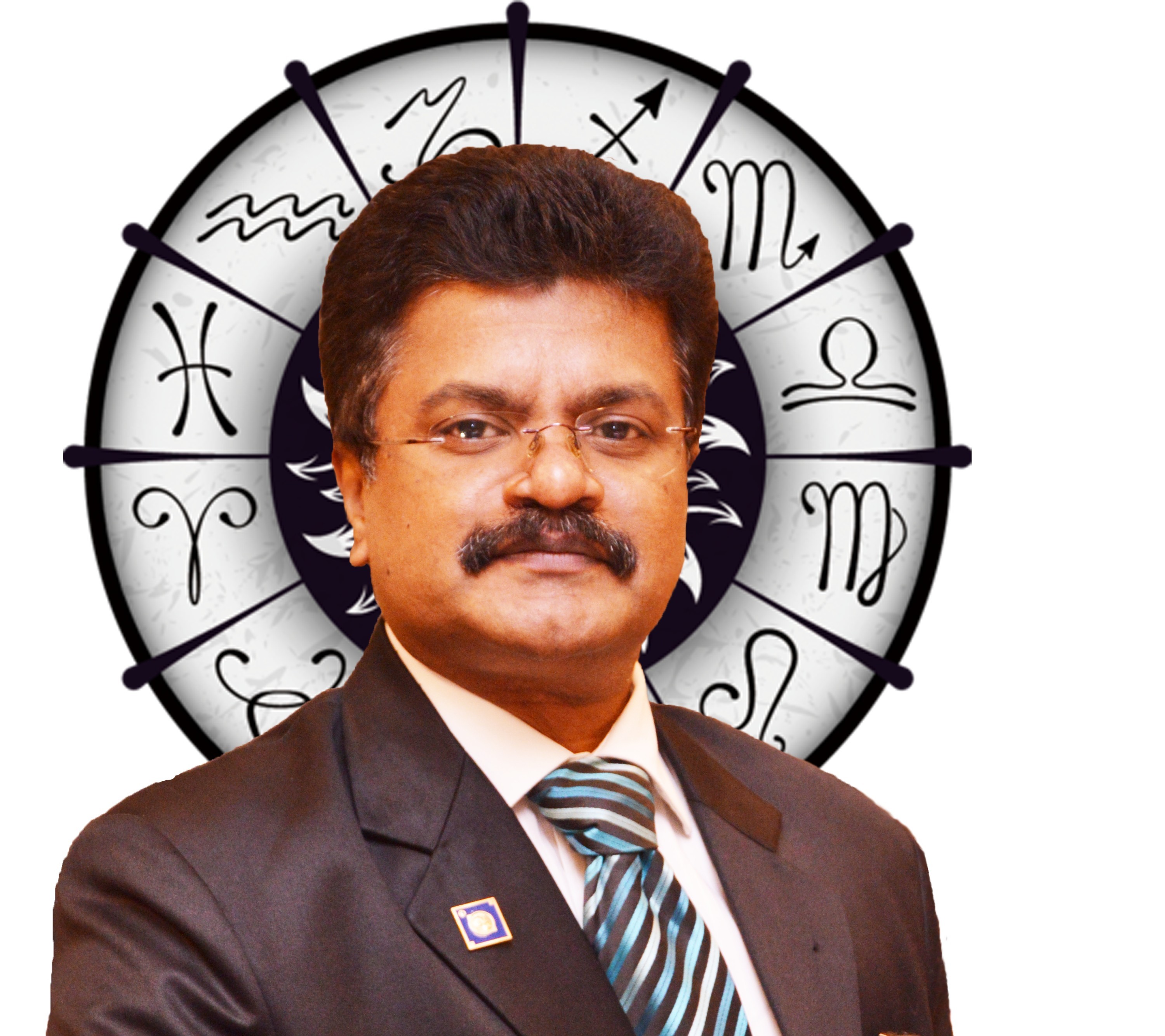
By Guruji E K Dhilip Kumar
Email : ekdhilipkumar@gmail.com
Website : www.astrologyekdk.com
Planets do not control us.


Discussion